Source Stainless Steel Mixing Bowl for Kitchen, Restaurant, and Buffet
Find and compare 30 stainless steel mixing bowl options from China. Evaluate models like MB025 and MS-24 based on thickness, weight, and dishwasher-safe features for kitchen, restaurant, and buffet equipment needs.
Key considerations
Products List




Comprehensive Sourcing Guide
Stainless Steel Mixing Bowl Sourcing Guide
The global market for stainless steel mixing bowls is defined by a distinct separation between disposable and durable industrial-grade equipment, with the supplied data confirming a clear focus on non-disposable, long-life assets. Buyers must recognize that the observed product attributes, such as the "Eco-Friendly" designation and "Stainless Steel" material composition, indicate a shift toward sustainable kitchen infrastructure designed for high-volume environments like restaurants and buffets. This distinction is critical because it dictates the procurement strategy; unlike single-use alternatives, these bowls require rigorous verification of material thickness and structural integrity to ensure they withstand repeated mechanical stress and thermal cycling in professional settings.
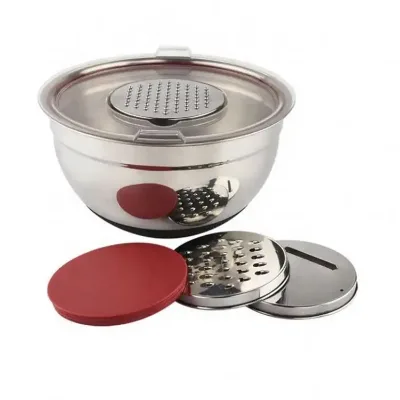
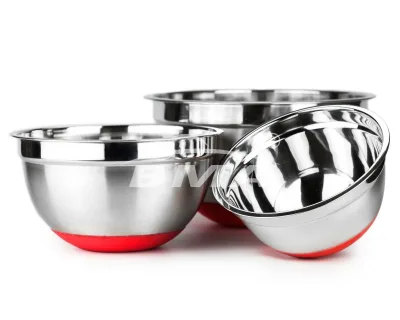
Procurement decisions for these items hinge on understanding the specific application context, which ranges from general kitchen mixing to specialized tasks like use with grinders. The observed listings highlight a variety of shapes, predominantly round, and finishes that include polished surfaces and silver unicolor options, catering to both functional utility and modern aesthetic requirements. Sourcing teams must align their selection with the intended operational workflow, ensuring that the chosen models, such as those with specific model numbers like MB025 or MS-24, meet the physical demands of the specific culinary environment, whether it involves heavy-duty dough mixing or delicate salad preparation.
Product Scope and Observed Listing Signals
The product scope for stainless steel mixing bowls in the current market is characterized by a wide variance in dimensions and specialized features, ranging from compact units to large-capacity vessels suitable for industrial processing. Buyers will encounter listings that specify exact internal and external diameters, such as inner Φ240mm or inner Φ180mm configurations, alongside varying thicknesses that directly correlate to durability and weight. The observed data indicates that while some products are designed for general mixing, others are explicitly marketed for specialized applications like grinding, necessitating a careful review of the product name and standard specifications to avoid purchasing equipment that lacks the necessary structural rigidity for the intended task.
Listing signals also reveal significant diversity in customization capabilities and packaging standards, which serve as primary indicators of supplier flexibility and logistical readiness. The market data shows that customization is available for many models, allowing buyers to request specific dimensions or branding, while other listings strictly adhere to non-customized, standard production runs. Furthermore, the packaging methods vary from simple OPP bags to complex 5-layer export cartons, suggesting that the supplier's ability to protect the product during transit is a variable that must be assessed on a case-by-case basis rather than assumed to be uniform across all vendors.
Technical Specifications to Verify
Material thickness is the most critical technical parameter to verify, as it directly influences the bowl's resistance to denting, heat retention, and overall lifespan in a commercial kitchen. The observed data presents a wide range of thicknesses, from 0.35mm to 0.8mm, indicating that not all stainless steel bowls are created equal; thinner gauges may be suitable for light-duty tasks but could fail under the stress of heavy mixing or stacking, whereas thicker gauges offer superior durability for high-volume operations. Buyers must explicitly request the thickness specification for each model number, such as MB-43 or MB-51, to ensure the selected product matches the mechanical demands of their specific workflow.
Dimensional accuracy and shape consistency are equally vital, as the internal and external diameters must align with the capacity requirements of the kitchen equipment and storage systems. The listings provide precise standard measurements, such as DIA160*85MM or Inner Φ4.72, which serve as benchmarks for verifying that the delivered goods match the ordered specifications. Additionally, the surface finish, described as "Polished" in the data, should be inspected to ensure it meets hygiene standards and does not harbor bacteria in micro-scratches, while the "Round" shape must be confirmed to ensure compatibility with standard mixing machines and storage racks.
Compliance and Safety Documentation
Food safety compliance is non-negotiable for stainless steel mixing bowls intended for direct food contact, requiring suppliers to provide valid certification documents that verify the material's safety for human consumption. The observed data explicitly lists FDA and LFGB certifications, which are essential for ensuring that the stainless steel alloy does not leach harmful substances into food, particularly when the bowls are used for acidic ingredients or subjected to high temperatures. Procurement teams must demand current, verifiable copies of these certificates for every batch of goods, as the presence of these certifications in the listing does not guarantee that every individual unit in a shipment has been tested against these rigorous standards.
Beyond material safety, the operational safety of the equipment must be validated through testing for dishwasher compatibility and structural stability under load. The data confirms that many of these bowls are dishwasher safe, a crucial feature for commercial kitchens that rely on automated cleaning cycles for efficiency and hygiene. However, buyers should verify that the "Dishwasher Safe" claim is backed by specific testing results, ensuring that the polished finish and structural integrity remain intact after repeated exposure to high-temperature wash cycles and harsh detergents, preventing premature degradation or warping that could compromise food safety.
Cost Drivers and Commercial Terms
The cost of stainless steel mixing bowls is primarily driven by the material thickness, the complexity of the manufacturing technique, and the level of customization required. Thicker gauges, such as the 0.8mm variants observed, naturally incur higher material costs and may require more energy-intensive polishing processes, leading to a higher unit price compared to thinner, standard models. Additionally, the availability of customization options, including specific dimensions or branding, introduces variable costs that can significantly impact the final price, making it essential for buyers to balance their need for tailored specifications against their budget constraints.
Commercial terms, particularly Minimum Order Quantities (MOQ) and packaging requirements, play a decisive role in the total cost of ownership and supply chain efficiency. The observed data indicates a broad MOQ range from 1 to 1000 pieces, with some specific listings requiring a minimum of 1000 pieces, which can be a barrier for smaller buyers or those testing new product lines. Buyers must negotiate these terms carefully, considering that higher MOQs often result in better unit pricing but increase inventory holding costs, while the choice between export cartons and simple bagging can affect shipping volume and damage rates, ultimately influencing the landed cost of the product.
Supplier Qualification and Quality Control
Supplier qualification for stainless steel mixing bowls requires a thorough assessment of their manufacturing capabilities, specifically their ability to maintain consistent thickness and dimensional tolerances across large production runs. The presence of OEM/ODM support in the market data suggests that many suppliers offer flexible production models, but buyers must verify that these suppliers have the technical expertise to execute custom orders without compromising the structural integrity of the stainless steel. This involves auditing the supplier's quality control processes to ensure that the "Polished" finish and "Round" shape are consistently applied, preventing defects that could lead to product rejection or customer complaints.
Quality control protocols must extend beyond the factory floor to include rigorous pre-shipment inspections that verify the physical attributes of the bowls against the agreed-upon standards. Buyers should implement a sampling plan that checks for weight consistency, as the observed data lists specific weights like 149g and 220g, which serve as indicators of material density and thickness accuracy. Furthermore, the inspection should confirm that the packaging, whether it is a P. Bag+Carton or a 5-Layer Export Carton, is sufficient to protect the polished surfaces from scratches and dents during transit, ensuring that the product arrives in the condition specified in the purchase order.
Long-Term Procurement Checks
Long-term procurement success depends on establishing a robust feedback loop with suppliers to monitor the performance of the mixing bowls in real-world kitchen environments. Buyers should track metrics such as the frequency of dents, warping, or finish degradation over time to validate the initial technical specifications and ensure that the selected models continue to meet the operational demands of the business. This data-driven approach allows for the identification of potential quality issues early, enabling proactive adjustments to the supplier base or product specifications before they escalate into significant operational disruptions.
Sustainability and supply chain resilience are also critical long-term considerations, as the "Eco-Friendly" attributes observed in the market suggest a growing demand for durable, reusable kitchen equipment. Buyers should evaluate the supplier's commitment to sustainable manufacturing practices and their ability to maintain a stable supply of high-quality stainless steel, which is subject to global market fluctuations. By maintaining a diversified supplier network and regularly reviewing the environmental impact of the procurement process, organizations can ensure that their kitchen equipment strategy remains aligned with both operational efficiency and broader corporate sustainability goals.
FAQs
What certifications do these stainless steel mixing bowls have?
These stainless steel mixing bowls are certified with FDA and LFGB standards. This ensures they meet strict safety requirements for food contact. The material is non-disposable and designed for long-term use in professional settings. Buyers can rely on these certifications for compliance in international trade and kitchen equipment procurement.
Can I customize the stainless steel mixing bowls for my brand?
Yes, customization is available for these stainless steel mixing bowls. The product page indicates that OEM and ODM support is provided. Buyers can request specific designs or modifications to suit their brand identity. This flexibility allows for tailored solutions in restaurant and buffet equipment supply chains.
What is the minimum order quantity for these mixing bowls?
The minimum order quantity is 1000 pieces for these stainless steel mixing bowls. This MOQ applies to the standard models listed. Buyers should consider this threshold when planning inventory. The product is packed in export cartons or OPP bags, ensuring safe delivery for bulk orders.
Are these stainless steel mixing bowls dishwasher safe?
Yes, these stainless steel mixing bowls are dishwasher safe. They are designed for easy maintenance in high-volume environments like restaurants and buffets. The polished technique and stainless steel material ensure durability. This feature simplifies cleaning processes and supports efficient kitchen operations for commercial buyers.
What specifications are available for the stainless steel mixing bowls?
Available specifications include various diameters such as 16cm, 19cm, 22cm, and 24cm. Thickness options range from 0.35mm to 0.8mm. Models like MB025 and MS-24 offer different inner and outer dimensions. These variations allow buyers to select the precise size and weight needed for their specific mixing or serving requirements.
Where are these stainless steel mixing bowls manufactured?
These stainless steel mixing bowls are manufactured in China. The origin is clearly stated as China for all listed models. Buyers can expect consistent production standards from this location. The export-ready packaging ensures that goods are prepared for international shipping and logistics from the manufacturing site.